UK Finance Ends Coinbase Membership After Eligibility Review
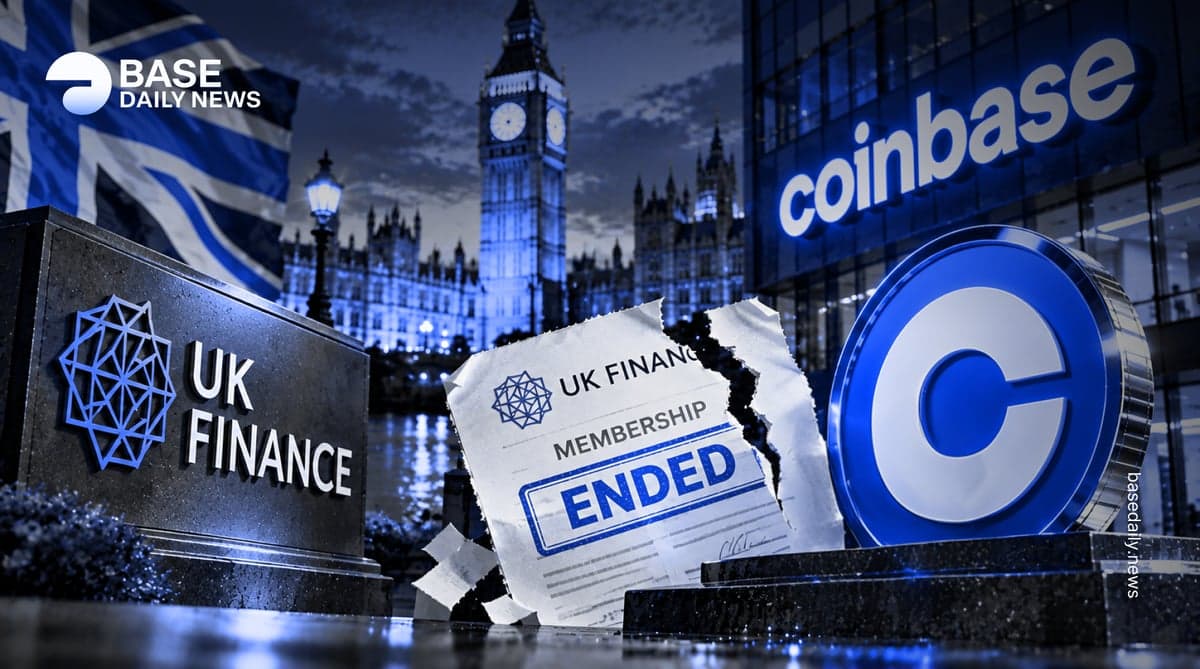
UK Finance has ended Coinbase’s membership following a review of the trade association’s membership criteria, according to a Bloomberg report published on September 23. The decision removes the U.S.-based cryptocurrency exchange from an industry organization representing a broad range of banks, financial institutions, payment companies and technology firms in the United Kingdom.
Bloomberg reported that UK Finance’s board notified Coinbase that its membership had been terminated after an internal assessment concluded that standalone cryptocurrency exchanges did not meet the organization’s core eligibility standards. Coinbase reportedly retains the right to appeal the decision.
The development comes as the UK’s financial authorities prepare to introduce a broader regulatory framework for cryptoasset businesses. The Financial Conduct Authority says applications for the new regime will open on September 30, 2026, with the framework expected to take effect on October 25, 2027.
Why Coinbase Lost Its UK Finance Membership
UK Finance describes itself as the leading industry body for financial services in the UK. Its membership includes more than 300 firms across banking, markets, payments and other financial services, while its associate membership is open to organizations supporting the wider financial-services industry.
According to the Bloomberg report, UK Finance’s board concluded after reviewing its membership requirements that a standalone crypto exchange no longer met the standards required for membership. The decision therefore relates to the trade association’s eligibility rules rather than a regulatory order from a UK financial regulator.
The distinction is important. Losing membership in UK Finance does not itself prevent Coinbase from operating a cryptocurrency business in the UK. Cryptoasset activities are governed separately by UK regulatory requirements, including rules administered by the FCA. The regulator says businesses providing certain cryptoasset services in the UK must register under the current Money Laundering Regulations, while firms conducting activities covered by the new regime will require FCA authorization.
Coinbase and the Changing UK Crypto Framework
The timing of the decision is significant because the UK is moving from its existing cryptoasset framework toward a more comprehensive regulatory regime.
The FCA says firms will be able to apply for authorization or vary existing permissions from 7 a.m. on September 30, 2026. The new regime is expected to begin on October 25, 2027, bringing specified cryptoasset activities within a broader authorization and supervision framework.
The regulator has also made clear that firms operating cryptoasset businesses in the UK need to meet applicable registration or authorization requirements. Under the current framework, cryptoasset exchange providers operating in the UK generally fall within FCA registration requirements under the Money Laundering Regulations.
Coinbase has also continued operating under the UK's cryptoasset financial-promotion framework. Coinbase's own UK guidance explains that its website, app and marketing materials are subject to FCA financial-promotion requirements, including specific risk warnings and restrictions on certain trading incentives.
UK Finance Already Engages With Digital Asset Regulation
The membership decision does not mean UK Finance has stopped engaging with the crypto sector or digital-asset regulation.
In September, UK Finance published a response to consultations from the FCA and Bank of England concerning stablecoin regulation. The trade association said its members generally supported the direction of the proposed framework while calling for additional economic and policy analysis around how the rules would address risks and which intermediaries should fall within the regime.
UK Finance has also published guidance on the approaching FCA cryptoasset authorization process. The organization noted that firms preparing for the new regime need to consider areas including governance, financial resources, technology, outsourcing, custody and financial-crime controls.
That broader regulatory work provides context for the Coinbase decision. However, the available reporting does not establish that UK Finance terminated Coinbase specifically because of any particular regulatory dispute, stablecoin policy disagreement or banking relationship.
Stablecoin Debate Adds to the Broader Tension
The original report also places the membership decision against a wider disagreement between parts of traditional finance and the crypto industry over stablecoins, banking relationships and the treatment of digital assets.
One area of debate has been whether stablecoins that provide rewards or yields could compete with traditional bank deposits. Crypto companies have argued for rules that allow digital-asset products to develop, while traditional financial institutions have raised questions about the potential impact on deposits, financial stability and regulatory protections.
Coinbase has been an active participant in U.S. policy discussions surrounding stablecoins and broader crypto legislation. However, those U.S. policy debates should be distinguished from UK Finance's stated membership review. The reported reason for Coinbase's removal was that the board determined the company no longer met the organization's membership criteria.
What the Decision Means for Coinbase
For Coinbase, the immediate consequence is the loss of membership in an industry trade association rather than a direct change to its exchange operations.
UK Finance says membership gives participating organizations access to policy work, industry collaboration, research, committees and engagement with policymakers and regulators. Losing that membership could therefore affect Coinbase's direct participation in the association's industry-policy activities, although the company can continue to engage with UK policymakers through other channels.
There is also an important distinction between association membership and regulatory authorization. UK Finance is an industry trade body, while the FCA is responsible for relevant regulatory registration and the incoming cryptoasset authorization framework. The two roles are separate.
As of the latest available UK Finance membership page retrieved for this article, Coinbase was still displayed in the organization's public member directory. This appears to indicate that the public directory had not yet been updated to reflect the reported termination, so the membership change is based on the Bloomberg report rather than that directory.
The episode comes at a notable point for the UK crypto industry, with firms preparing for the September 30 authorization gateway and the wider regulatory regime scheduled for 2027.