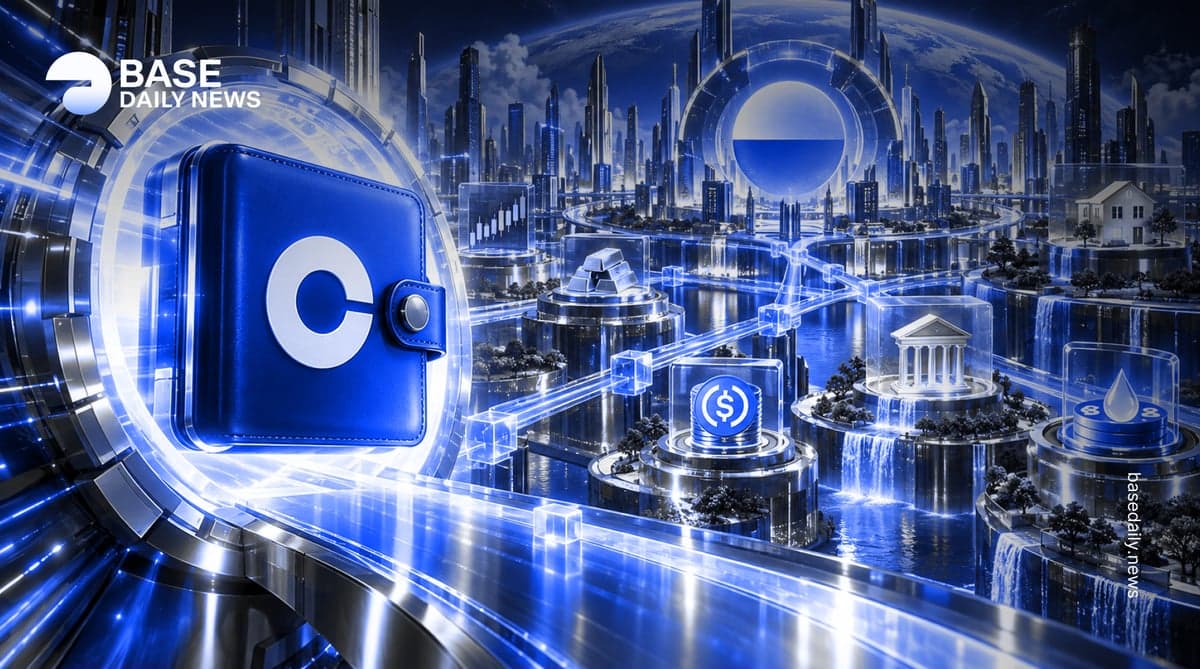
The renewed Coinbase Wallet now supports more than 10 networks, including Base, Ethereum, Solana, Bitcoin, BNB Chain, Polygon, Arbitrum, Optimism, Avalanche, Monad and Robinhood Chain.
From Base App to a Multichain Trading Gateway
Coinbase originally renamed its wallet as the Base App in July 2025, presenting it as an "everything app" combining social features, messaging, mini-apps, payments and trading.
The strategy has since shifted.
Coinbase Wallet is now positioned as a self-custodial gateway to a much broader onchain marketplace. The application supports spot trading, perpetual futures, prediction markets and tokenized stocks across multiple networks.
Coinbase Wallet product lead Ryan Kass described the wallet as a "test kitchen" for products and assets that may not be available through Coinbase's centralized exchange.
That makes the application less dependent on any single blockchain and gives Coinbase greater flexibility to add new assets and networks.
Base Remains Central to Coinbase's Strategy
The return of the Coinbase Wallet name does not mean Coinbase is stepping away from Base.
Base remains a major part of Coinbase's onchain infrastructure strategy, particularly in areas such as trading, payments, stablecoins and tokenized assets.
The company has also previously acknowledged that the consumer application was becoming less Base-centric as it expanded into a broader trading platform.
That creates a different relationship between the wallet and the network.
Rather than using the wallet's name to promote Base exclusively, Coinbase can use the wallet as a multichain distribution layer while allowing Base to compete based on its infrastructure, liquidity, applications and assets.
Tokenized Stocks Strengthen Base's Onchain Finance Push
The timing of the rebrand is particularly important because Base has been expanding aggressively into tokenized financial assets.
On September 1, Base announced that tokenized stocks were live on the network, with Coinbase issuing the assets for eligible non-U.S. users.
Base says the tokenized equities are backed 1:1 by shares held with a regulated custodian and are issued as B20 tokens on Base. They can then be held in self-custodial wallets and used across the Base DeFi ecosystem.
This creates an important connection between Coinbase Wallet and Base.
Users can access tokenized assets through a self-custodial wallet, while Base provides infrastructure where those assets can potentially become programmable and composable with other onchain applications.
Base Is Targeting More Than Crypto Trading
Base's strategy increasingly extends beyond conventional cryptocurrency markets.
The network is building around several major financial use cases:
Trading
Base is positioning itself as infrastructure for always-on financial markets, including crypto and tokenized assets.
Payments
Stablecoins can provide faster and lower-cost settlement for payments and transfers.
Tokenization
Tokenized stocks and other real-world assets bring traditional financial instruments onto blockchain infrastructure.
Onchain Applications
Developers can build financial products that combine tokenized assets with DeFi, lending, trading and other programmable applications.
Base's official materials describe the broader objective as bringing the global economy onchain, with assets that can be traded, borrowed against and accessed around the clock.
Coinbase Wallet Could Become a Distribution Layer for Base
The most important strategic opportunity may be the relationship between Coinbase Wallet and Base.
Coinbase has a large consumer-facing distribution channel, while Base provides blockchain infrastructure for applications, assets and financial markets.
If Coinbase Wallet becomes a major gateway to onchain finance, Base can benefit when users discover Base-native assets and applications through that interface.
The potential flywheel is straightforward:
Coinbase users → Coinbase Wallet → Onchain assets → Base applications → More Base activity
However, Coinbase's multichain strategy also means Base will have to compete for users alongside Ethereum, Solana, Arbitrum, Optimism, BNB Chain and other supported networks.
That makes Base's underlying performance and ecosystem increasingly important.
Base's Tokenized Stock Ecosystem Is Expanding
Base is also actively encouraging developers to build applications around tokenized equities.
The network's September 1 developer initiative called on builders to create new financial products around programmable stocks, including neobrokerages, trading applications and other financial primitives.
This could give Base a growing role in the emerging market for onchain equities.
Tokenized stocks can potentially be combined with stablecoins, decentralized exchanges and other financial applications, creating markets that operate continuously rather than following traditional stock-market hours.
The result could be a broader onchain financial ecosystem where traditional assets become building blocks for new applications.
Why the Rebrand Matters for Base
At first glance, losing the Base App name could appear negative for Base.
Strategically, however, the change could have an opposite effect.
A multichain Coinbase Wallet gives users access to more networks while allowing Base to compete within that larger ecosystem.
Instead of depending on the wallet's branding to drive Base adoption, the network can attract activity through its growing ecosystem of tokenized stocks, stablecoins, DeFi applications and payments.
This could ultimately create a stronger distinction between Coinbase's wallet as the consumer gateway and Base as the underlying financial infrastructure.
The Bigger Onchain Finance Strategy
The wallet rebrand also fits Coinbase's broader push toward an "everything exchange."
Coinbase is increasingly combining centralized exchange services with self-custody, onchain trading and access to assets that may not be available through its centralized platform.
The renewed Coinbase Wallet supports long-tail assets and new market categories while remaining self-custodial, giving users control over their keys.
For Base, this creates a potentially powerful distribution channel.
The network does not need to become the only chain supported by Coinbase Wallet. Instead, it needs to become one of the most useful networks for the financial products users want to access.
What It Means for Base
The biggest opportunity for Base is therefore activity rather than branding.
Coinbase Wallet's multichain expansion could introduce more users to Base assets and applications without forcing the wallet itself to remain Base-exclusive.
At the same time, Base's expansion into tokenized stocks gives the network a new category of assets beyond crypto-native tokens.
If tokenized equities, stablecoins, DeFi and payments begin interacting at scale, Base could increasingly function as infrastructure for a broader onchain financial system.
There are still significant challenges, including regulation, liquidity, user adoption and competition from other networks.
But the direction is clear: Base is positioning itself around onchain finance rather than simply being another Ethereum Layer 2.
Conclusion
Coinbase's decision to restore the Coinbase Wallet name marks a significant change in its consumer-facing onchain strategy, but it does not represent a retreat from Base.
Instead, Coinbase Wallet is becoming a broader multichain gateway for trading and onchain finance, while Base continues to build the infrastructure for tokenized assets, payments and financial applications.
The launch of tokenized stocks on Base adds another important piece to that strategy, giving developers access to programmable equities that can interact with the wider Base ecosystem.
For Base, the long-term opportunity is distribution.
If Coinbase Wallet becomes a major gateway to onchain finance, Base could benefit from increased user discovery, liquidity and application activity even as Coinbase expands beyond a single-chain identity.
The next stage of Base's growth may therefore be less about owning the wallet brand and more about becoming one of the most important infrastructure layers for the global onchain financial economy.