Base Activates Cobalt Upgrade on Mainnet
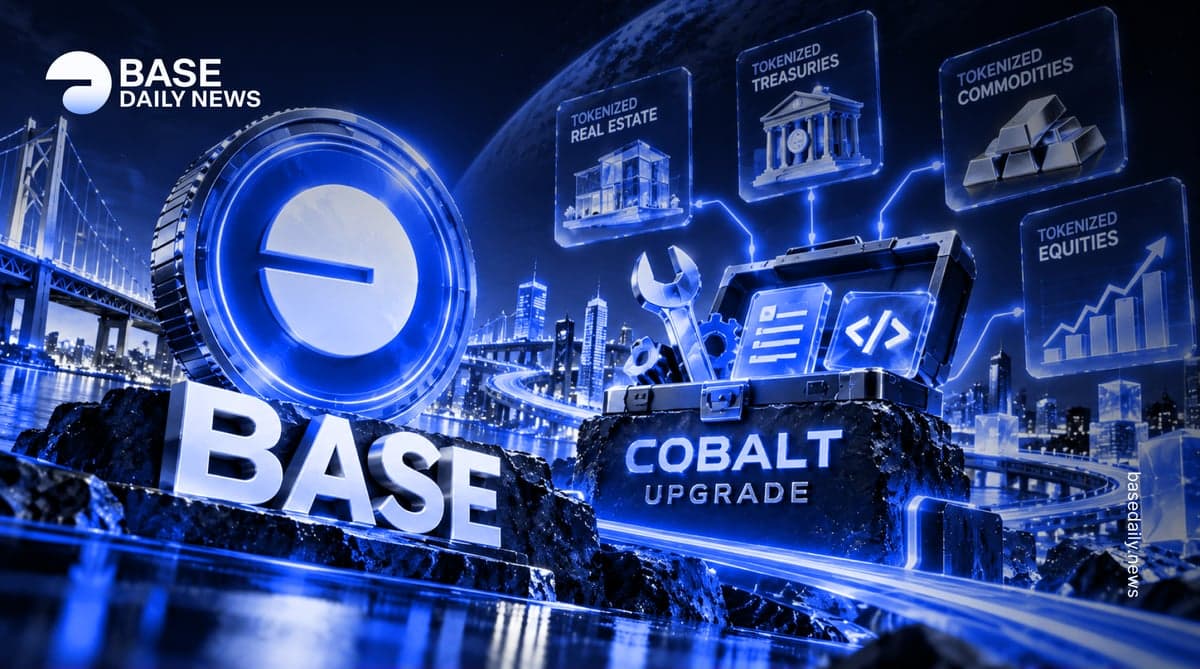
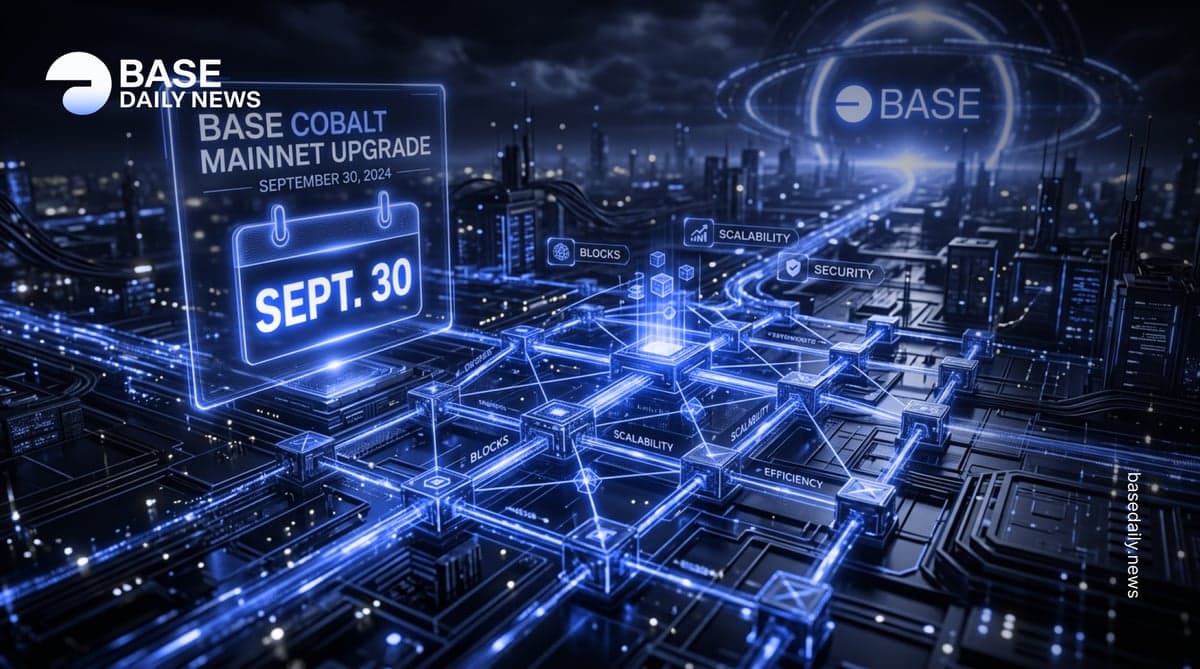
Base has activated its Cobalt upgrade, introducing new infrastructure for tokenized assets and conditional transactions as the Ethereum layer-2 network continues expanding its focus on onchain finance.
According to Base’s official Cobalt documentation, the upgrade went live on Base mainnet on September 30, 2026, following its September 23 activation on Base Sepolia. Cobalt improves the B20 token standard, adds Validity Transactions and introduces additional protocol infrastructure changes.
For tokenized assets, the changes are particularly focused on giving issuers more flexible ways to manage authorization, compliance and corporate actions. B20 improvements include scheduled multiplier updates and new composite policies that can combine multiple authorization rules.
B20 Gains More Flexible Compliance Controls
One of the central changes in Cobalt is an expansion of the B20 token standard, Base’s native token framework for assets issued directly on the network.
The upgrade introduces UNION and INTERSECT policies to the B20 PolicyRegistry. These allow issuers to combine existing allowlists or blocklists instead of maintaining a single flattened list. For example, an issuer could require an account to satisfy multiple authorization conditions or qualify through one of several approved lists. Base’s documentation says composite policies can combine between two and four simple policies.
This is relevant for tokenized securities and other regulated assets because compliance requirements can involve several independent conditions. An issuer could use separate policies for requirements such as identity verification, investor eligibility or geographic restrictions and then combine those policies directly onchain.
The changes therefore make B20 more adaptable for assets that need restrictions around who can hold or transfer them. Base’s B20 and Cobalt documentation provides the technical specifications for these changes.
Cobalt Adds Administrative Token Seizure
Cobalt also introduces a new seize function for B20 assets. The feature allows an authorized administrator to reassign tokens from one wallet to another when the relevant issuer-configured policies permit the operation.
Base describes seizeWithMemo as an administrative balance reassignment rather than a token burn. The operation moves the balance from one address to another, leaves total supply unchanged and attaches a memo to the transfer. It requires the appropriate SEIZE_ROLE and issuer-configured policies before it can be used.
Importantly, the feature is opt-in at the token level. Base’s documentation states that if the relevant seizure policy has not been configured, an account cannot be seized through the function. This gives issuers control over whether the functionality is enabled for a particular token.
The functionality can be particularly relevant to tokenized financial products where issuers may need administrative mechanisms for specific circumstances. However, the exact rules governing any token depend on the policies established by its issuer.
Validity Transactions Give Traders Conditional Execution
Cobalt also introduces Validity Transactions, giving users a way to submit signed transactions that become eligible for inclusion only when specified onchain conditions are satisfied.
According to Base’s Validity Transactions documentation, supported conditions currently include balance, storage, block-number and Flashblock-index predicates. Base evaluates those conditions before including the transaction.
This can be used for applications such as conditional swaps and withdrawals. For example, a trader could prepare a transaction that becomes eligible only if a specified blockchain condition is met before a defined block window expires.
The system also separates the validity criteria from the signed transaction itself. Base says those criteria do not appear in the resulting onchain transaction, while eligibility does not guarantee that the transaction will ultimately be included in a block.
For developers, the feature provides a way to build intent-like transaction flows without necessarily requiring a separate keeper or custom settlement contract.
Base Expands Its Tokenized Finance Strategy
Cobalt arrives as Base continues to build infrastructure aimed at bringing traditional financial assets and markets onchain.
Base’s 2026 strategy identifies global markets as one of its core priorities, with the network targeting tokenized equities, commodities and other asset classes. The network has also been developing protocol-level features for markets and payments.
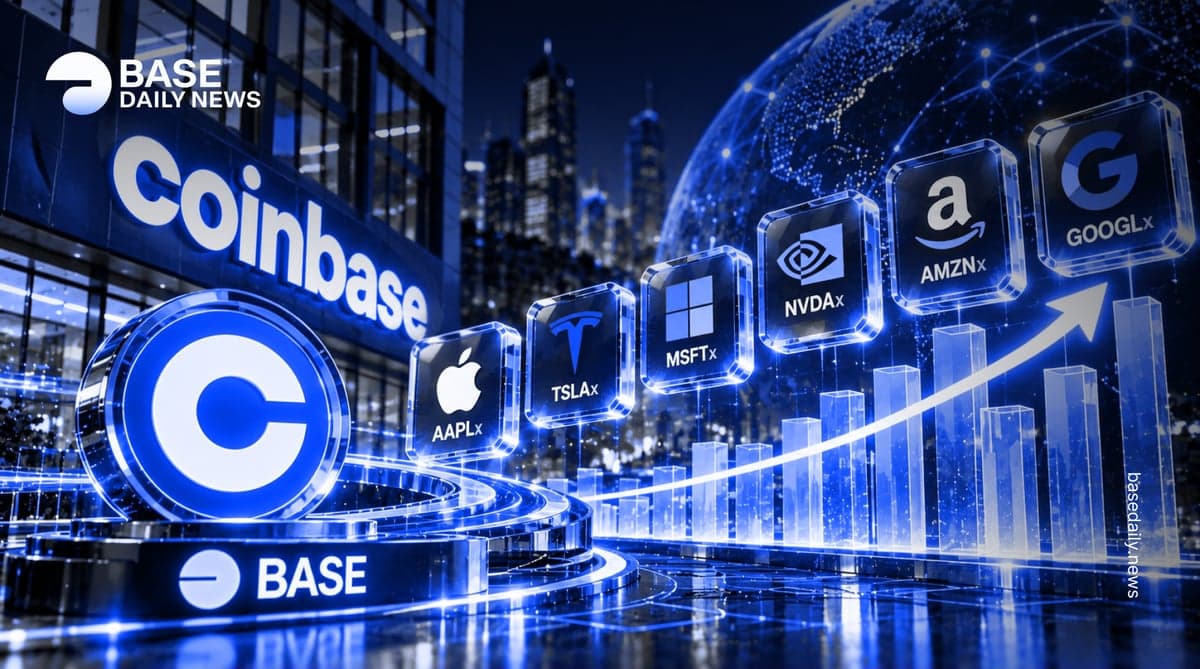
A major example is Coinbase Tokenized Stocks, which launched natively on Base in August. Base says these assets are issued using the B20 standard and represent claims on underlying shares held through regulated custody arrangements. Users in eligible jurisdictions can hold the tokenized stocks in self-custody wallets and use them across the Base ecosystem.
The tokenized-stock system also demonstrates why features such as scheduled multipliers and policy controls matter. Base says dividends and stock splits can be reflected through an onchain multiplier rather than changing the underlying token balance, helping preserve DeFi positions and integrations.
What Cobalt Means for Base’s Onchain Markets
The Cobalt upgrade combines several pieces of infrastructure aimed at making Base more suitable for financial assets with complex requirements.
For issuers, the enhanced B20 framework provides more sophisticated authorization options and administrative controls. For traders and developers, Validity Transactions introduce a native way to condition transaction inclusion on the state of the blockchain.
Base’s own chain interface now highlights B20 tokens and Validity Transactions among its featured capabilities, showing how these features fit into the network’s broader development direction.
Base has also outlined additional infrastructure work, including faster block production and further support for transaction and payment functionality. The broader objective is to make financial assets more programmable while keeping them usable across wallets, trading venues and decentralized applications.
Cobalt therefore represents more than a routine network upgrade. It adds specific building blocks for tokenized assets, compliance-oriented transfers and conditional execution, reinforcing Base’s stated focus on developing infrastructure for markets and financial applications onchain.