El Salvador Reportedly Develops New Digital Dollar App
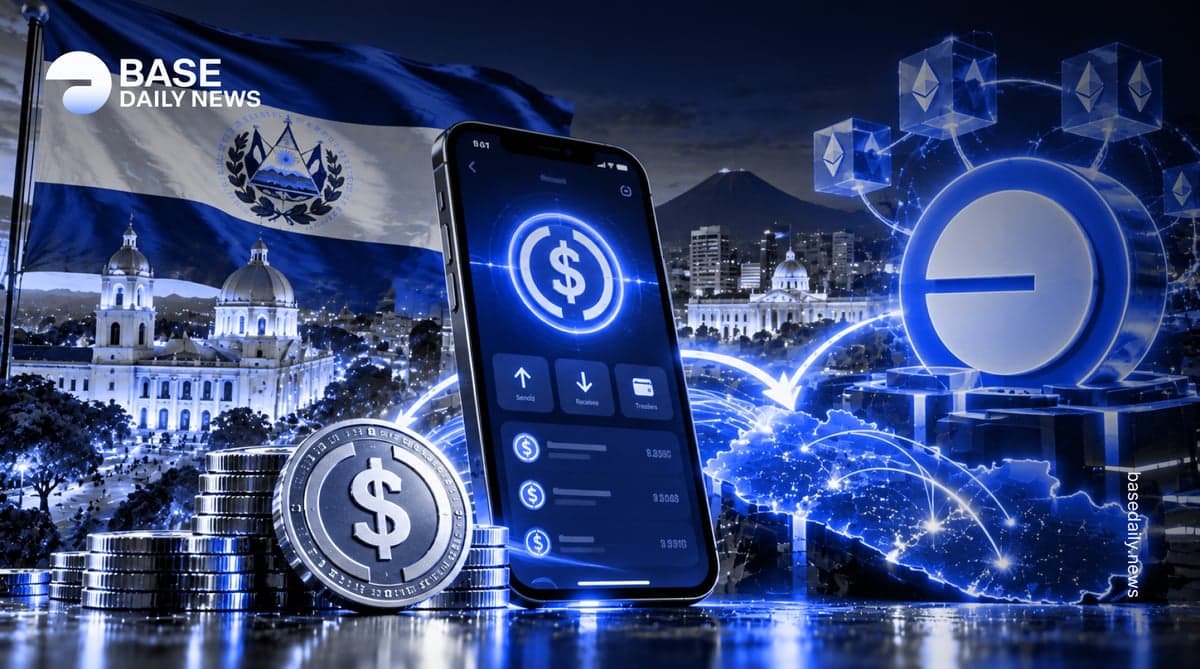
El Salvador is reportedly building a government-backed application designed to let users send and hold digital dollars on Base, the Ethereum layer-2 network developed by Coinbase.
The development would represent a new direction for El Salvador's government-backed digital-asset infrastructure. The country previously introduced Chivo Wallet as its official digital wallet for Bitcoin and U.S. dollars, but the role of that government-backed wallet has since been reduced as part of changes associated with the country's agreement with the International Monetary Fund.
The new application described in the supplied report would instead focus on digital dollars, rather than positioning Bitcoin as the primary asset. However, the available public sources reviewed for this article do not yet provide enough information to independently confirm the application's name, launch date, operating company or the specific digital-dollar asset it will support.
How the Reported Base App Would Work
According to the supplied report, the application is being designed for two core functions: sending and holding digital dollars.
The application would operate on Base, giving users access to blockchain-based dollar transactions through infrastructure connected to Coinbase's Ethereum layer-2 network. Base is designed to provide lower-cost transactions while remaining connected to Ethereum's broader ecosystem.
For users, the important distinction is that digital dollars generally refer to dollar-denominated digital assets such as stablecoins. Coinbase describes USDC as a dollar-pegged stablecoin that is redeemable on a 1:1 basis for U.S. dollars. Its documentation also explains how USDC can be used across blockchain networks. Coinbase USDC documentation
The supplied report does not specify whether the Salvadoran application will use USDC specifically. That detail should therefore not be assumed until the government, Coinbase or the developers of the application publish additional information.
A New Direction After the Chivo Wallet Era
The reported project comes after a significant change in El Salvador's government-backed crypto infrastructure.
The country launched Chivo Wallet in 2021 as part of its Bitcoin initiative. Government material at the time described Chivo as a wallet capable of handling both Bitcoin and dollars, including transfers and conversions between the two assets. El Salvador government information on Chivo Wallet
More recently, however, the country's digital-asset policy has changed. In September 2026, the International Monetary Fund said majority ownership and operational control of the government's e-wallet had been transferred to a private operator, while the government retained a minority stake and custody responsibilities for customer assets.
That makes the reported Base-based application notable because it could indicate a different approach to government-supported digital payments: one centered on dollar-denominated digital assets and an external blockchain network rather than the earlier Chivo model.
Why Base Is Relevant to Digital Dollar Payments
Base is an Ethereum layer-2 network developed by Coinbase. Its infrastructure is increasingly used for stablecoin transactions, payments and other onchain financial applications.
Coinbase's USDC on Base documentation explains how users can obtain and use USDC on Base, providing an existing infrastructure for dollar-denominated digital transactions.
A government-backed application using Base could therefore connect users to an existing blockchain environment rather than requiring the creation of an entirely separate settlement network. At this stage, however, the specific architecture, custody model, transaction fees and user-access requirements of the reported Salvadoran application have not been publicly established in the sources reviewed.
El Salvador's Digital-Asset Strategy Is Changing
El Salvador became internationally known for its 2021 Bitcoin initiative and the creation of Chivo Wallet. Five years later, the country's approach to government involvement in crypto payments has evolved.
The IMF said in September that public participation in Chivo had been substantially unwound and that the government had transferred majority ownership and operational control of the wallet to a private operator. The IMF's assessment provides the clearest recent official context for the changing role of the government's digital-wallet infrastructure. IMF statement on El Salvador
Against that backdrop, a reported application built around digital dollars and Base would represent a materially different emphasis. Instead of focusing primarily on Bitcoin transactions, the reported product would center on dollar-denominated digital assets and blockchain-based payments.
What to Watch Next
The most important next step will be an official announcement identifying the application, its developers and the digital-dollar asset it will support.
Further details will also be needed on whether the application will be directly operated by the Salvadoran government, developed through a private partner, or use a hybrid structure. Information about custody, compliance, availability, transaction limits and the relationship with Coinbase or Base would also clarify how the system is intended to operate.
For now, the reported Base application should be treated as a developing story rather than a completed government launch. El Salvador's earlier official wallet program is well documented, while the specific details of the new Base-based digital-dollar application remain limited in publicly verifiable sources.
If confirmed, the project would add another chapter to El Salvador's evolving approach to blockchain-based financial infrastructure, moving the country's government-backed digital-asset efforts toward a model centered on dollar-denominated digital transactions and an established Ethereum layer-2 network.