Coinbase Revisits Its Wallet Branding
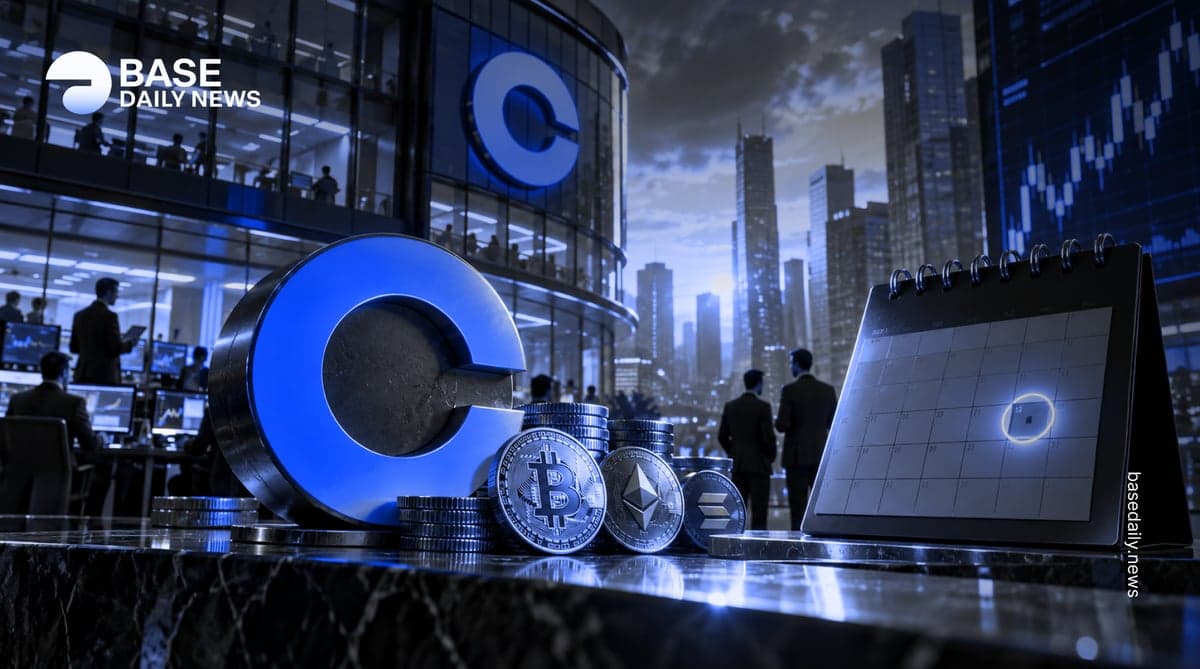
Coinbase is revisiting the branding of its wallet application after the product spent roughly 14 months under the Base App name, according to the information supplied for this report.
The move comes as Coinbase continues positioning its wallet as more than a tool for holding and transferring crypto. The company is increasingly presenting the application as an entry point to onchain markets, including tokenized stocks, memecoins, perpetual futures and prediction markets.
The branding discussion is significant for the Base ecosystem because the Base name can imply that the application is primarily connected to Coinbase's Layer 2 network. In reality, Coinbase's wallet infrastructure supports multiple blockchain networks and assets.
The App Is Expanding Beyond a Traditional Wallet
Coinbase has been steadily broadening the role of its wallet products. Rather than focusing solely on self-custody, the company has been building an experience that combines wallet functionality with trading and access to onchain applications.
Coinbase's official Wallet page describes the product as a way to explore and use onchain applications while maintaining control of assets. The company has also promoted Base as an important part of its onchain ecosystem.
That broader positioning helps explain why the name of the application has become an important issue. A wallet carrying the Base name could be interpreted as being limited to Base, even though the underlying experience can interact with assets and networks beyond the chain.
Tokenized Stocks and Other Onchain Markets
Coinbase is also highlighting a growing range of financial products that can be accessed through its broader onchain ecosystem.
These include tokenized stocks, memecoins, perpetual contracts and prediction markets. The expansion reflects the company's effort to make onchain financial products accessible through a single consumer-facing experience.
Coinbase's developer platform provides infrastructure for developers building wallets, payments and other onchain applications, while its Base network provides an Ethereum Layer 2 environment for decentralized applications.
For users, the combination means the wallet can serve as an interface for activities that go well beyond simply storing cryptocurrency.
Base Remains an Important Part of Coinbase's Strategy
The branding debate should not be interpreted as Coinbase moving away from Base itself.
Base remains Coinbase's Ethereum Layer 2 network and a major part of the company's onchain strategy. The official Base website describes the network as an Ethereum Layer 2 designed to provide a fast and low-cost environment for building onchain applications.
The distinction is therefore important: the Base network is a blockchain infrastructure layer, while the Base App has been used as a consumer-facing application and wallet brand. Changing the latter does not necessarily imply any change to the former.
Coinbase Wallet Supports Multiple Networks
Another reason the naming question matters is the wallet's multi-chain functionality.
Coinbase's official support documentation lists support for multiple networks and explains how assets can be accessed through the wallet experience. This makes a broader wallet-oriented name easier for users to understand if the application is designed to work across different chains.
The multi-chain approach also separates the wallet from the Base blockchain itself. Users can interact with assets and applications across different networks instead of treating Base as the only environment available through the product.
A Public Conversation Around the Name
The branding issue also became part of a public conversation involving Base leadership.
Jordan Fish, better known as Cobie, was asked whether the Base App supported other chains. In response, he wrote: "Ok I'm definitely changing the name lmao."
Fish took over day-to-day leadership of Base in July, according to the information supplied with the original report.
The comment illustrates why the distinction between the Base network and the consumer application matters. If an application supports multiple blockchain ecosystems, a name strongly associated with one particular chain can potentially create confusion among users.
Existing Users Do Not Need to Treat the Branding Change as a Fund Migration
For existing users, the reported branding change does not mean that assets have to be transferred to a new wallet.
The original information states that funds are unaffected and that users can update the existing application on iOS or Android. In other words, the change is presented as a product and branding update rather than a requirement to create a separate wallet or move assets.
Coinbase's wallet help center provides the company's official guidance on wallet access, supported assets, security and other wallet-related functions.
Users should nevertheless rely on Coinbase's official application and support channels when installing updates or responding to wallet-related messages, particularly because wallet scams can attempt to imitate legitimate product changes.
Coinbase's Onchain Strategy Continues to Broaden
The branding discussion arrives as Coinbase continues to push deeper into onchain finance.
Base provides the underlying Ethereum Layer 2 infrastructure, while Coinbase's consumer products provide users with interfaces for interacting with crypto assets and blockchain applications. The company is also building infrastructure for developers and businesses through products such as Coinbase Developer Platform.
The reported return toward wallet-focused branding therefore fits into a larger question about how Coinbase wants users to understand its onchain products. The company is not simply offering a place to store crypto; it is attempting to make trading, payments, decentralized applications and newer blockchain-based financial products accessible through its ecosystem.
For Base, the development is relevant because a broader wallet strategy can serve as another connection between Coinbase users and the Base ecosystem. However, the branding of the consumer application should be distinguished from developments taking place directly on the Base blockchain.