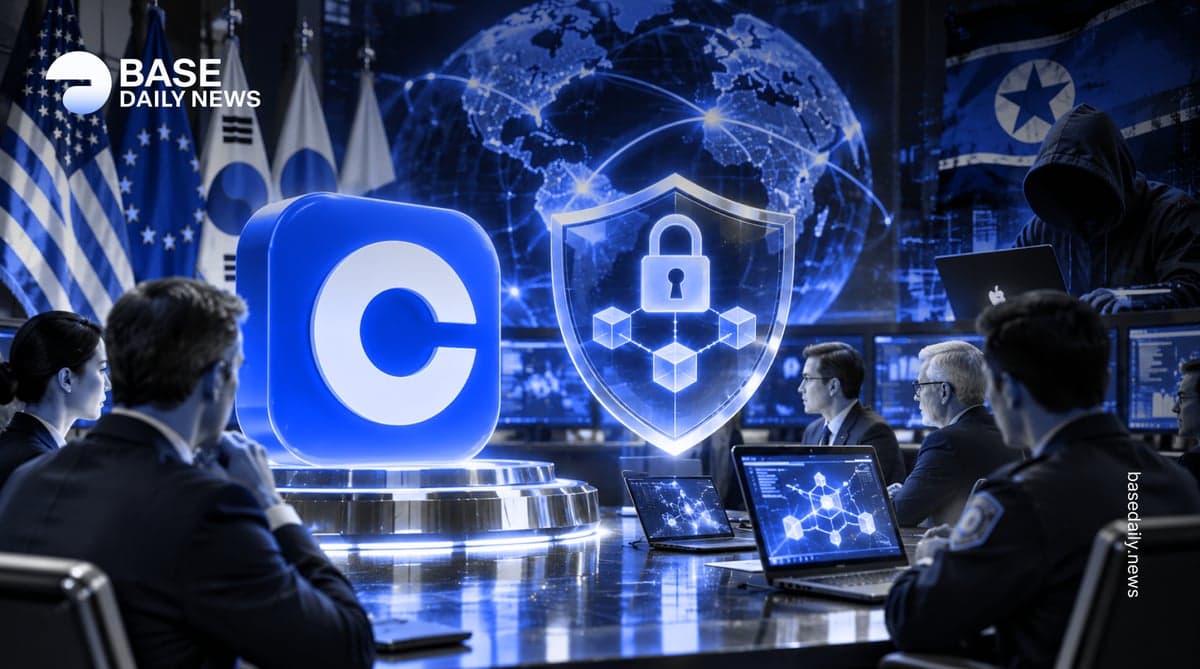
Dublin Symposium Brings Crypto Firms and Law Enforcement Together
Coinbase participated in a two-day symposium in Dublin aimed at improving the response to cyber threats linked to North Korea, formally known as the Democratic People's Republic of Korea (DPRK). The event brought together government representatives, law enforcement agencies and private-sector security specialists to discuss ways to identify attacks, trace stolen cryptocurrency and disrupt the networks behind them.
Coinbase co-sponsored the symposium with the U.S. Department of State's Office of Cooperative Threat Reduction. Global Affairs Canada, Google and Payward supported the program. Participants included representatives from the Federal Bureau of Investigation (FBI), the U.S. Treasury's Financial Crimes Enforcement Network (FinCEN) and Ireland's Garda National Cyber Crime Bureau.
The discussions focused on improving information sharing between organizations and strengthening cooperation across national borders. The objective was to help security teams recognize suspicious activity earlier, respond more quickly to incidents and make it harder for attackers to move or convert stolen digital assets.
Crypto Theft and Fake Remote Workers Remain Key Threats
North Korean cyber operations target businesses to steal funds and generate revenue for the regime, including resources linked to its nuclear weapons and ballistic missile programs. These operations can begin with social engineering rather than a direct technical attack.
Attackers may approach employees with convincing job offers, impersonate trusted colleagues or ask targets to install unfamiliar software for an interview. These tactics are designed to build trust and persuade victims to provide access to company systems or sensitive information.
A related threat involves North Korean information technology workers using false identities to secure remote employment. Such workers can generate revenue for the regime while potentially exposing hiring companies to insider security risks.
The FBI has previously warned cryptocurrency businesses about tailored social engineering campaigns. Its September 2024 public advisory describes tactics used to target employees in the crypto and decentralized finance industries, including fake employment opportunities and personalized approaches intended to deliver malware.
The issue of fraudulent remote workers has also continued to evolve. In an October 2026 advisory, the FBI warned that North Korean IT workers were increasingly using facilitators and stolen identities to gain access to companies and broaden their recruitment efforts.
Investigators Focus on Early Detection and Faster Reporting
The Dublin program examined how companies can identify suspicious activity before an intrusion occurs and how investigators can follow the movement of funds after a crypto theft.
Coinbase investigators shared information about changing attack methods. Other sessions addressed warning signs associated with fraudulent job applicants, ways to strengthen hiring checks and procedures for reporting suspicious activity to law enforcement.
Discussions with U.S. and Irish authorities also covered the evidence investigators need when a company reports a suspected incident. Early reporting can help preserve relevant information and give investigators a better opportunity to identify the people and infrastructure involved.
The emphasis on cooperation reflects a challenge that individual companies cannot easily solve alone. Attackers can operate across jurisdictions, exploit differences in security practices and move stolen assets through multiple services. Sharing threat indicators and establishing contacts before an incident can help organizations coordinate their response more effectively.
Blockchain Records Can Help Trace Stolen Cryptocurrency
Tracing stolen funds is another important part of the response. Public blockchains record transactions, allowing investigators and blockchain security specialists to follow the movement of cryptocurrency between addresses.
However, identifying transaction paths is only one part of an investigation. Connecting wallet activity to individuals, organizations and criminal networks requires additional evidence and cooperation between private companies and public authorities.
Coinbase said it works with blockchain analytics firms to track stolen assets and, alongside law enforcement where applicable, blacklist, freeze and report them. The company also noted that stablecoin issuers and other industry participants have acted in previous DPRK-attributed theft cases to freeze a significant portion of stolen funds.
The remaining assets can be more difficult to trace, freeze or seize. Exchanges, security researchers, analytics firms, stablecoin issuers and law enforcement therefore have complementary roles in the process.
Freezing or intercepting assets depends on legal authority and technical capabilities, and it does not guarantee that victims will recover their funds. Nevertheless, coordinated action can make it harder for criminals to convert stolen cryptocurrency into usable revenue.
Security Measures for Crypto Users and Businesses
The symposium also highlighted practical steps individuals and companies can take to reduce exposure to impersonation and social engineering attacks.
Users should independently verify unexpected requests, particularly when a recruiter or business contact asks them to install software, download files or perform unusual tasks. Requests should be checked through a separate, trusted communication channel rather than relying on the original message.
Interview-related downloads deserve particular caution. Unfamiliar applications, requests to disable security protections or instructions to run commands should be treated as warning signs until independently verified.
Account credentials and wallet recovery phrases should also remain private. Passwords, verification codes and seed phrases should never be shared in response to unexpected messages or requests.
Companies face additional responsibilities when recruiting remote workers. The FBI's guidance on North Korean IT workers outlines identity verification and due diligence measures that organizations can use to reduce the risk of inadvertently hiring fraudulent applicants.
Anyone who suspects their Coinbase account is at risk should contact the company through its official support channels.
Cooperation Remains Central to Countering DPRK Cybercrime
The Dublin symposium brought together industry specialists and public authorities to address threats that extend beyond individual platforms or national borders. Its agenda covered both the theft of cryptocurrency and the use of fraudulent identities to gain employment inside technology companies.
Coinbase's participation reflects the role crypto businesses can play in sharing threat intelligence, supporting investigations and helping track stolen assets. The broader challenge requires continued coordination between companies, government agencies and law enforcement.
Earlier detection, faster incident reporting and stronger cross-border information sharing can make these operations harder to execute. While these measures cannot eliminate the threat or guarantee the recovery of stolen funds, they strengthen the collective response to North Korean cyber activity.